
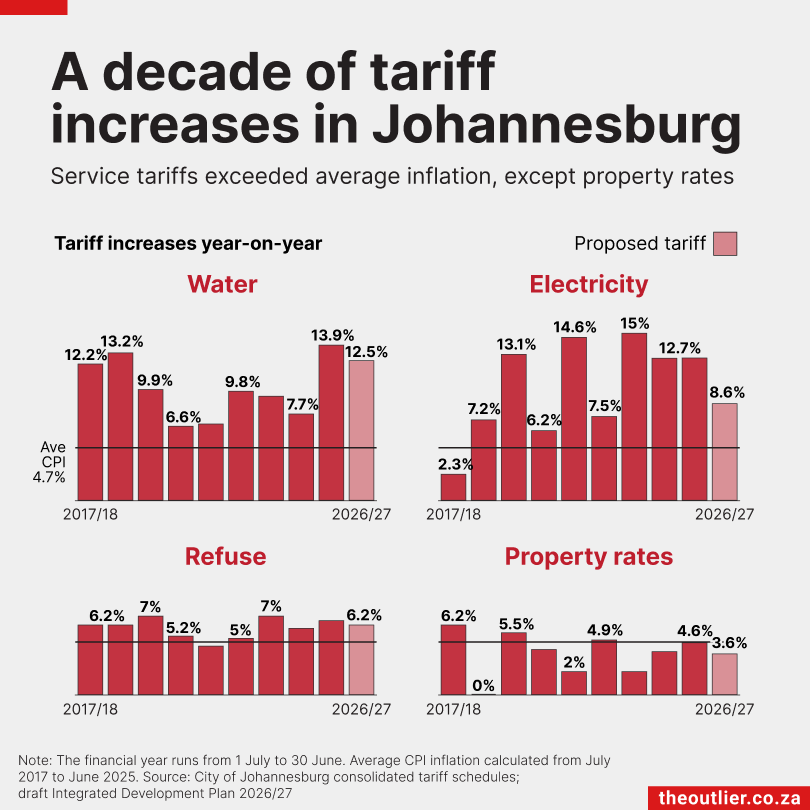
Johannesburg's proposed tariff increases for 2026/27, 12.5% for water and 8.6% for electricity, are straining residents' ability to afford basic services, the city acknowledges in its draft Integrated Development Plan (IDP).
Tariffs fund service delivery and infrastructure, but because the city buys water from Rand Water and electricity from Eskom, which have proposed their own tariff increases of 11% and 8.6% respectively, the increases are largely passed on to consumers. The city warns that this is already pushing residents who can afford it toward boreholes and solar alternatives.
The revenue pressure is worsened by significant internal losses: 44.7% of water went unbilled in 2024/25 due to leaks, bursts and illegal connections, while electricity distribution losses hit 27.1%, which the city calls "revenue forgone." Notably, the city froze property rates in 2018/19, the one time in a decade it offered relief when water tariffs rose 13.2%.
To close the gap between revenue and expenses, Johannesburg is pursuing active revenue enforcement, including cracking down on illegal outdoor advertising, projected to unlock R300-million annually, alongside the Metro Trading Services Reforms, developed with National Treasury, to ring-fence utility finances and make water, sanitation, electricity and refuse services self-funding by decade's end. The city also plans to deploy AI and sensors to curb water leak losses and diversify its energy mix through independent power producers.
Produced in partnership with Our City News.
 Access Premium Data